North Carolina Henbit Weed Control
Henbit is a winter-annual weed prevalent throughout the United States. Although it has attractive purple flowers, it’s packed with seeds that allow it to spread easily across large areas. This growth can overwhelm and destroy your lawn if you don’t control it. Strong pre-emergent henbit control is your first line of defense, but it should also be supported by post-emergent care when necessary, in addition to a comprehensive lawn care routine.
To eliminate henbit in eastern North Carolina, trust Barefoot Lawn Care to do it right. By incorporating a strong henbit control strategy into a full lawn care program, we’ll ensure you have the best weed-free grass around.
What Is Henbit?
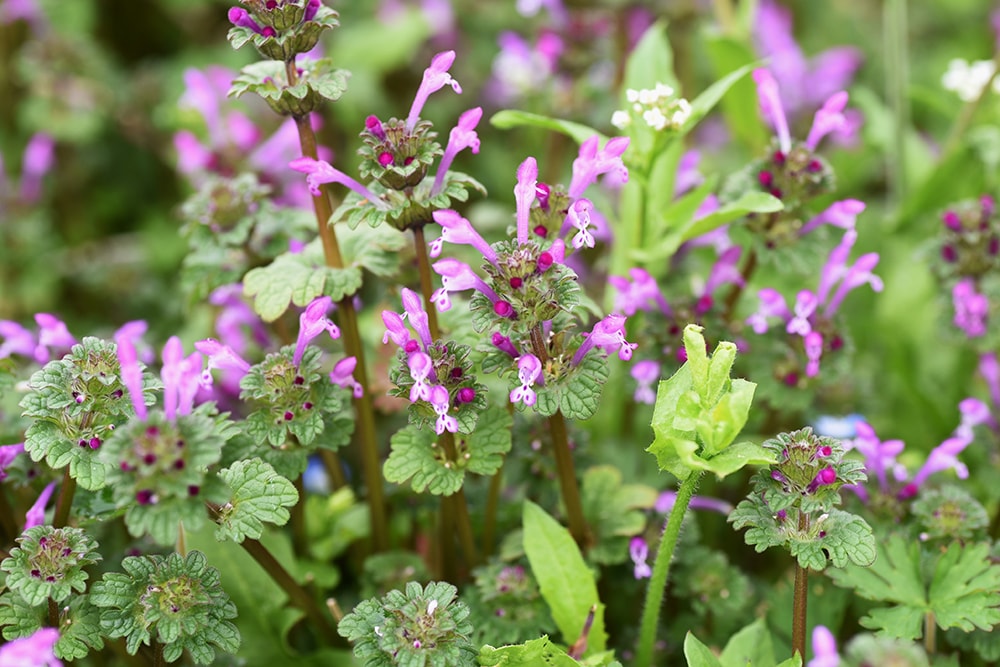
Henbit is a pervasive weed also known as henbit weed, henbit deadnettle or the more scientific Lamium amplexicaule. It’s identified by its somewhat square stems, purple flowers and veined, toothed, rounded leaves. Single henbit roots can sprout multiple growths and have a low-growing, dense, bush-like profile.
As a cool-season weed, henbit germinates in autumn and early winter, although the tell-tale purple flowers may not appear until spring. A single plant produces thousands of seeds during its short lifetime. These seeds will germinate the next fall, creating an ongoing growth cycle. Destroying henbit before it reseeds is the best option for good control, but the weed can be managed with post-emergent care, too.
How to Get Rid of Henbit
Your Barefoot team will develop a lawn care plan that effectively reins in weeds while protecting surrounding foliage, ensuring healthy areas thrive and bad growths disappear.
Pre-Emergent Henbit Control
Begin pre-emergent henbit control in late summer or early autumn to prevent new seed germination. Stopping the seeds helps stop the re-growth cycle before it starts. Various herbicides might be used in pre-emergent treatments, and application processes vary.
It’s important to note that Henbit struggles to grow in healthy lawns with strong existing grass. Rather, it prefers damp areas with sparse foliage. Maintaining a well-irrigated lawn with strong ground cover helps healthy grass thrive while creating less of a chance for henbit to take root.
Post-Emergent Henbit Solutions
Post-emergent henbit control occurs when seeds have germinated, usually in late fall and early winter. Some treatments can also occur in the spring.
Destroying henbit after it emerges involves removing existing growths and neutralizing seeds. Mowing alone doesn’t kill henbit, but hand-weeding gets rid of the roots. You’ll likely also need to use post-emergent herbicides to tackle both live growth and new seeds. Mulching and spring fertilization may also deprive seeds of optimal growing conditions while protecting good grass.
Why Customers Trust Barefoot Lawn Care
Henbit weed control requires a committed, well-planned approach. We make it happen. Learn why homeowners and businesses from Raleigh to Wilmington trust Barefoot Lawn Care to create spaces that resist henbit.
Professional Henbit Removal in North Carolina
As seasons change and yards evolve, Barefoot Lawn Care will be there deliver the latest weed removal, irrigation, fertilization and landscaping services for optimal lawn health year-round, ensuring henbit never has a chance.
Contact us today and eliminate weeds for good.
Henbit FAQs
What does henbit look like?
Henbit is a low-growing weed that is part of the mint family. It has multiple square-shaped stems shooting from a single root. The stems have circular leaves with serrated or scalloped edges and purple or reddish-purple flowers on top. Henbit weed will usually begin to grow in autumn and early winter, with full growth and flowering in spring.
Why is henbit a problem?
Henbit’s problem is that each weed spreads hundreds or thousands of seeds in its short lifetime. These seeds may re-germinate the next autumn, creating new plants that spread more seeds the next season. This can quickly lead to henbit growth taking over an entire yard. Strong pre- and post-emergent henbit control prevents new germination and destroys existing growth and seed spread.
Is henbit poisonous?
Henbit is not poisonous to humans, but it’s not a good food source. Overconsumption might cause stomach upset and digestive issues.
Should you pull up henbit?
Yes, you should pull up existing henbit because simply mowing over it won’t destroy the roots. Weeding likely needs to be coupled with post-emergent herbicides to destroy seeds already spread. This will stave off new growth.
How do I control henbit in my lawn?
Henbit weed control varies based on your lawn’s needs. Barefoot Lawn Care will create a henbit treatment plan that destroys growth while protecting surrounding plants and grass.
Your lawn treatment plan will also optimize irrigation and encourage strong, dense grass growth. Healthy conditions make it harder for henbit to take root, so we’ll create a durable space that withstands weed encroachment.
How much does henbit treatment cost?
Henbit weed control programs vary, so prices depend on your needs. Barefoot Lawn Care’s treatment options are cost-effective while delivering robust solutions without waste. Find out what we can do for your lawn by requesting a free estimate from our team.